



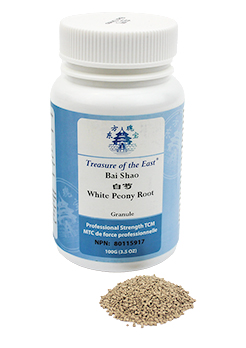
Treasure of the East Herbs
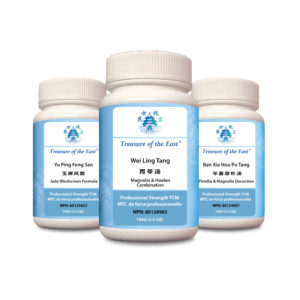
Eastern Currents is proud to partner with Treasure of the East, the first FDA-registered company to import granule herbs from mainland China to the US. Treasure of the East is a woman- and AAPI-owned TCM herbal company based in Ithaca, NY, representing the biggest and most trusted granule supplier in China, Tianjiang Pharmaceutical.
Tianjiang Pharmaceutical is the global market and technology leader in concentrated herbal extracts. Founded in 1992, Tianjiang was the first manufacturer of concentrated herbal extracts to receive China's Good Manufacturing Practice (GMP) certification for pharmaceutical products. Since then, Tianjiang has developed 30 patents on the extraction, granulation, and packaging of Chinese herbal extracts.
Tianjiang engages in research partnerships with 22 Chinese medicine research universities and 26 leading TCM hospitals, and has lead the industry in the development of quality standards. Its TLC botanical fingerprint standards have been adopted by the China FDA as the standard for all Chinese herb producers. Tianjiang, along with China Pharmaceutical University and Nanjing University, are the three parties invited by US Pharmacopeia (USP) to collaborate on the development of US standards for Chinese herbal extracts.
Currently, Tianjiang produces 700 varieties of herbal extracts made from botanical roots, stems, barks, flowers, fruits, seeds, leaves, mushrooms, and more. Botanical materials are sourced directly from over 300 farms (including 66 of Tianjiang's own farms) to ensure quality from seed through finished product.
Quality Seeds. High-quality herbal extracts require high-quality seeds. Tianjiang has long partnered with China Pharmaceutical University's Department of Genetics and Breeding to identify and cultivate seeds that are not only authentic, but represent the best specimens of each botanical species.
Geo-Authentic. Approximately 95% of the raw herbs used are geo-authentic, meaning they come from their "Dao Di" or their regions of traditional origins. While they would prefer to source all herbs from their Dao Di regions, herbs from some Dao Di regions are not able to meet the stringent standards for sustainability, water and soil quality, heavy-metal content, or concentrations of active chemical constituents.
Directly from the Farms. The herbs are grown from high quality seeds and are sourced directly from over 300 farms across 22 provinces. In addition to these long-standing relationships, Tianjiang owns or co-owns more than 100 farms compliant with The World Health Organization's Good Agriculture and Collection Practices (GACP) to ensure quality from seedlings through finished products.
Optimal Freshness. Tianjiang’s close relationships with farmers allow them to produce many herbal extracts from a single annual batch immediately after harvest for the best possible freshness and efficacy. Most suppliers, in contrast, source herbs from the wholesale market. These shorter, faster supply chains mean they are able to avoid many common problems related to variable potency, degradation, and growth of bacteria or mold due to prolonged or improper storage.
No Endangered Species, Ever. Since 2016, Tianjiang has strictly adhered to the Convention on International Trade in Endangered Species of Wild Fauna and Flora (CITES). That means you will never find endangered species like tiger bone or rhino horn in Treasure of the East products. There are five species of protected plants that are procured from sustainably farmed sources: Tian Ma, Bai Ji, Yun Mu Xiang, Sha Shen (Bei), and Rou Cong Rong. Because Tianjiang procures these items directly from the farmers, not from the bulk herb market, they are able to obtain certification from CITES confirming that the herbs come from sustainable sources.
China's Gold Standard in Botanical Identity. Tianjiang developed hundreds of thin-layer chromatography (TLC) botanical identification standards in order to verify authenticity with absolute certainty. Since then, the same standards have been adopted nationwide by the China Food and Drug Administration. This means that all other suppliers of Chinese herbs must strive to meet our supplier's standards for botanical authenticity.
Full-Spectrum Extracts. Full-spectrum extracts contain all the active chemical constituents of whole herbs in concentrated form. Full-spectrum extracts most closely mimic the effects of whole herbs because full-spectrum extracts contain the same balance of chemical constituents and the same complex interactions between chemical constituents as whole herbs.
Standardized Extracts. Many herbal extracts on the market are known as standardized extracts. Standardized extracts concentrate a single chemical within the herb to a specified concentration, which is expressed as a percentage (0.01% to 99%). The specified chemical is isolated using chemical solvents like alcohol, acetone, or hexane so that it may be added to botanical materials to reach a specified concentration. Standardized extracts are particularly prevalent in the West, where medical research is often focused on the effects of an isolated chemical. The benefit of standardization is that batch-to-batch concentrations are consistent; however, many other important chemicals may be lost or diluted in the process. As a result, no matter the concentration of the specified chemical, the medicinal value of standardized extracts cannot be considered comparable to that of whole herbs or of full-spectrum extracts.
Why Full-Spectrum vs. Standardized? All traditional evidence-based medicine systems are based on whole herbs. Full-spectrum extracts contain the same balance of chemical constituents and the same complex interactions between chemical constituents as whole herbs. However, full-spectrum herbs may suffer from inconsistent potency from batch-to-batch. Tianjiang overcomes issues with batch-to-batch inconsistency that is prevalent with many full-spectrum herbs by developing characteristic single- and multi-constituent chromatography standards for more than 150 varieties of Chinese herbal extracts. In other words, Treasure of the East herbs are full-spectrum herbal extracts that, in many cases, also have the consistency of standardized extracts.
Treasure of the East Full-Spectrum Extracts. Treasure of the East’s herbal extracts are full-spectrum, water-based extracts produced by Tianjiang Pharmaceutical. Tianjiang's two-step extraction process captures water-soluble active components and essential oils using only purified water. Tianjiang's patented dry granulation process minimizes heat and the use of excipients compared to common wet spray techniques, and in doing so minimizes the denaturation and dilution of active chemical constituents. These processes help ensure that Treasure of the East herbal extracts align as closely as possible to the original whole herb.
Tianjiang overcomes issues with batch-to-batch inconsistency that is prevalent with many full-spectrum herbs by developing characteristic single- and multi-constituent chromatography standards for more than 150 varieties of Chinese herbal extracts. In other words, Treasure of the East herbs are full-spectrum herbal extracts that, in many cases, also have the consistency of standardized extracts.
From raw material to final product, Tianjiang’s state of the art full spectrum extraction methods preserve flavor, increase solubility, and deliver consistently high-quality herbal extracts. The cutting edge production technology is fully automated and backed by 30 patents across the manufacturing process. Of all the innovations, the dry granulation process is particularly remarkable. The patented dry granulation process basically presses the granules together and doesn't require any excipient aside from a minuscule amount of maltodextrin (derived from non-GMO corn and rice) as a processing aid. In contrast, the standard wet-spray granulation processes that most companies use require a core of either raw herb or starch to "seed" every granule. Most herbs (roots and rhizomes especially) naturally extract at around 5:1 concentration ratio. In those cases, when a filler is not required, an excipient is not used by Tianjiang, but other companies would still need to add it to form their granules.
While the glycemic index of maltodextrin is high (it is comparable to potato starch) the amount used is minimal due to the dry granulation process, and far less than granules processed using the wet-spray granulation process that requires larger amounts of other excipients.
Another benefit of the Tianjiang process and the excipient used is their dissolvability. Treasure of the East granules stay dissolved even after sitting for a while. No sludge at the bottom of the cup that is common with many granules!
Each batch of Treasure of the East herbs are tested for microbial contaminants (total plate count, yeast, mould, Escherichia coli, Salmonella, Staphylococcus); heavy metals (lead, cadmium, arsenic, mercury), and pesticide residues. A certificate of analysis including testing results are provided by Tian Jiang for each lot number and the results are analyzed by Eastern Currents Quality Assurance to ensure they meet the Health Canada standards. Eastern Currents also conducts randomized sampling testing with a third party Canadian lab.